Showing posts with label united nations news. Show all posts

Thursday, 29 May 2014

UN Peacekeeping: A Force for the Future

By Hervé Ladsous, Under Secretary General for the United Nations Department of Peacekeeping Operations, and Ameerah Haq, Under-Secretary-General for the United Nations Department of Field Support.
UNITED NATIONS Peacekeeping
A Force for the Future

It was a dark, February night in the hilly North Kivu province of Eastern Congo. At 02h45 a small, silent Unarmed Unmanned Aerial Vehicle, circled the sky around a village in Masisi territory and sent back live video of a group of armed men who had recently overrun a local military post. As the UUAV relayed pictures to a control room, senior military officers prepared to move their soldiers if the civilian populations in the area were directly threatened.

The attack never materialized, but if it had, the band of marauders would have gotten a most unpleasant welcome. This scene isn’t from a Hollywood studio film — it’s happening right now with the UN Peacekeeping force in the Democratic Republic of the Congo.

Today, 29 May, we mark the International Day of UN Peacekeepers and honour the 106 Peacekeepers who lost their lives in 2013. Over the last year, UN Peacekeeping has been asked to adapt to new threats and new challenges, helping more people than ever through some of the world’s most destructive conflicts.

Nearly two months ago, the UN Security Council established our newest peacekeeping mission in the Central African Republic, a country that continues to experience widespread violence. 

Once fully deployed, our mission’s 12,000 strong military and police presence will protect the population, Christians and Muslims alike, and assist authorities to re-establish state institutions that ultimately guarantee long-term stability. Elsewhere, our mission in Mali faces the constant threat of asymmetric attacks and simmering violence as it continues to promote an inclusive dialogue and a sustainable settlement to the conflict.

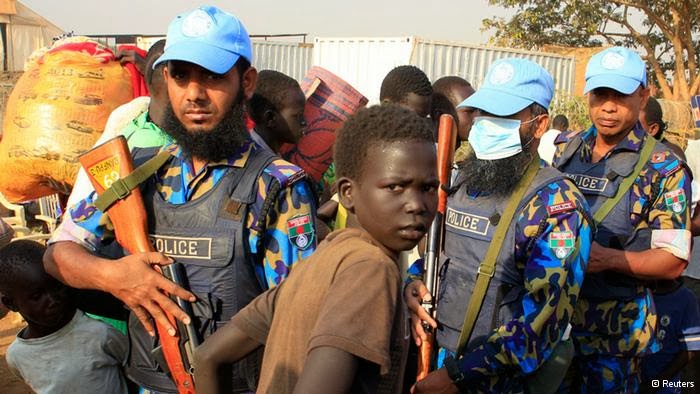
In South Sudan, the world’s youngest country, our mission operates within a political crisis that has seen thousands killed and many millions displaced. With the national army becoming a party to the conflict, the UN Peacekeeping Mission in the country has had to adapt itself overnight to assume the primary role of protecting over 85,000 civilians by opening its gates and allowing them inside.

In the face of these new challenges, UN Peacekeeping is being asked not only to deliver new solutions but to offer real value for money. Within increasing global financial constraints we are finding opportunities to innovate and modernise and ensure we have a peacekeeping force that is fit for purpose and ready for the future.

Last year, to help meet the challenges of protecting civilians in the vast Democratic Republic of Congo – where there is just one peacekeeper per 117 square kilometres – we launched a UUAV programme, a technological first for the UN. Also in the East of the country, where communities are under threat from armed militias, we deployed a specially equipped ‘Force Intervention Brigade’ to support the Congolese Army.

Last November, the Brigade successfully supported the military defeat of the Mouvement du 23 Mars (M23), an armed group operating in the North Kivu province, liberating areas under their control and removing the threat posed to civilians.

As the demand for UN Peacekeeping grows and the Organization is expected to deliver in fast-evolving scenarios, the UN is creating platforms that help it to adapt quickly and do more with its limited resources. 

For example, UN Peacekeeping will launch an Expert Panel on Technological Innovation that will advise on how we can best use new and emerging technologies.

The UN has also set up a regional centre in Entebbe which allows our missions to share the use of our air assets and has already saved the organization about $100 million between 2011 and 2013. Our Blue Helmets are also getting ‘greener’ through the responsible use and stewardship of limited resources, as we aim to leave our Mission areas in better shape than when we arrived. 

We are using Geographic Information Systems data to help find water sources for missions so that we do not impact negatively on the local water supply. Waste water treatment and recycling projects are installed in nine peacekeeping missions, with the goal to eventually implement it in all of our operations.

Member States and the UN have a fundamental responsibility to prevent armed conflict and to protect people from atrocities and egregious crimes. Today, protection is at the heart of modern UN Peacekeeping, with ten peacekeeping operations, containing 95 per cent of all our deployed personnel, having a mandate to protect civilians.

For UN Peacekeeping to quickly respond to a crisis, such as in South Sudan, or to deal with the complexity of contemporary threats faced in Mali or the Central African Republic, we are also increasingly strengthening our partnerships with Member States and regional and sub-regional organizations as well as pursuing cooperation between missions. 

In Mali and now the Central African Republic we have worked closely with the African Union and with sub-regional groups.

With a track record over 65 years, UN Peacekeeping continues to do hard jobs in difficult places. UN Peacekeeping brings a unique, universal legitimacy that is unmatched by any other international peace and security instrument. 

This with an annual budget that represents less than half of a percent of the total world military expenditure, UN Peacekeeping is not only indispensable it is simply put, good value.


Today, as we remember our fallen colleagues, we dedicate ourselves and the Blue Helmets as a force for peace, a force for change, a force for the future.

Monday, 31 March 2014

UN peacekeeping mission in Sierra Leone ends its work

UN PEACEKEEPING MISSION IN SIERRA LEONE ENDS ITS WORK
Today marks the official end of the United Nations Mission in Sierra Leone, the third and final phase of an engagement by the world body that started 15 years ago and at one stage saw the single largest peacekeeping force in its history deployed. 

More than 17 000 peacekeepers served under the United Nations flag alongside Sierra Leoneans to achieve a hard-won peace during an 11 years long conflict to disarm rebels and return the West African country to stability.

“The general atmosphere of peace now prevailing is the culmination of more than 15 years of successive Security Council mandated peace operations in the country,” Jens Anders Toyberg-Frandzen said when he delivered his final briefing to the Security Council on the work of the UN Integrated Peacebuilding Office in Sierra Leone (UNIPSIL) which he heads.

He pointed out that while the country has gained a solid footing on the path to recovery it will still require sustained international support to address the lingering challenges from the “brutal civil war” of the nineties.

Though the country is continuing on the right path, it still faces a number of challenges linked to the root causes of its decade-long civil war that require sustained attention and support, he said, emphasising the work ahead for Sierra Leone in addressing pervasive poverty and unemployment, especially among the youth, as well as endemic corruption, in addition to upholding the rule of law and widening the political space.

UNIPSIL would now transfer its responsibilities to the UN Country Team, which consists of 19 agencies, funds and programmes based on the United Nations Development Assistance Framework, known as UNDAF, and in support of the Government’s “Agenda for Prosperity,” a social and economic development strategy for 2013-2018.

The United Nations helped the Sierra Leonean government combat illicit diamond mining that fuelled the conflict and assisted with establishing control over the affected areas. With the UN's help, Sierra Leone's citizens voted in successive free and fair elections for the first time in their history.

United Nations peacekeepers disarmed more than 75 000 ex-fighters, including hundreds of child soldiers, and destroyed more than 42 000 weapons and 1.2 million rounds of ammunition. The United Nations assisted more than half a million Sierra Leonean refugees and internally displaced persons to return home and supported training for thousands of local police.

The world body’s peacekeeping operations have advanced a long way from the Sierra Leone model with an offensive mandate given to the MONUSCO Force Intervention Brigade in the DRC. The brigade, with includes South African air and ground elements, has played a major role in driving the M23 rebel group back into Uganda. It has just had its mandate extended for another year and will be operational until March 31 next year.

The success of the FIB will, if indications from the United Nations are accurate, be an influence on the still to be established United Nations peacekeeping mission for the Central African Republic.

Saturday, 11 January 2014

Extra UN troops for South Sudan

EXTRA UNITED NATIONS TROOPS FOR SOUTH SUDAN
The United Nations says it's working "as quickly as possible" to deploy 5,500 extra UN peacekeepers to protect civilians in South Sudan where fighting is focused on the oil hub of Bentiu and the Nile river town of Bor.

Forces of South Sudan's President Salva Kiir sought to regain the oil hub of Bentiu from rebels on Friday. At the UN, peacekeeping chief Herve Ladsous said extra troops were being deployed to protect Sudanese civilians.

Briefing the UN Security Council, Ladsous said the violent breakup of South Sudan's administration in mid-December had left probably a quarter of a million South Sudanese displaced, including 60,000 sheltering at UN compounds and tens of thousands who had sought refuge in Uganda, Kenya and Ethiopia.

Ladsous said the deadline for the extra deployments was "between four and eight weeks." Troops and police would be drawn from other UN and African Union missions, across Africa, he added, and would go "into a pro-active footing."

South Sudan's fighting, often along ethnic lines, has pitted Kiir's SPLA forces against rebels loyal to former vice president Riek Machar.

8,000 sheltering at Bentiu
The UN said it was ready to fend off any attacks on its own compound at Bentiu where 8,000 people are sheltering. UN deputy spokesman Farhan Haq described the situation as "unclear and fluid."  The news agency AFP said fighting was also raging around the town of Bor, the only other major town in rebel hands.

Hundreds of people fled through crocodile-infested swamps of the White Nile river and told how gunmen had shot civilians with machine guns as they fled.

Peace talks in deadlock
With peace talks in neighboring Ethiopia in deadlock, US Assistant Secretary for Africa Linda Thomas-Greenfield said South Sudan – formed only 3 years ago – was "in danger of shattering."
"Each day the conflict continues, the risk of all-out civil war grows as ethnic tensions rise," she told US lawmakers in Washington. The talks have faced delays after Kiir refused a rebel demand to release 11 high-level political detainees.

Death toll 'substantially' higher
At the UN, Ladsous said he estimated that the death toll was "very substantially in excess" of the 1,000 deaths the UN cited just after the conflict erupted on December 15. The violence began as a clash between rival army units in what President Kiir said was an attempted coup by Machar.


Machar denied that accusation, accusing Kiir of trying to root out political opponents. The conflict has trimmed South Sudan's oil production by around a fifth, depriving the impoverished nation of its main source of foreign currency.

Saturday, 4 January 2014

UN peacekeepers reinforcing presence in South Sudan amid continued fighting

Some 39 peacekeepers from the UNMISS Mongolian Battalion based in Rumbek, South Sudan, arrived in Bentiu on 30 December 2013 to reinforce UN presence in Unity state. Photo: UNMISS/Anna Adhikari

UN PEACEKEEPERS REINFORCING PRESENCE IN SOUTH SUDAN AMID CONTINUED FIGHTING
4 January 2014 – The security situation in South Sudan remains “fluid”, the United Nations peacekeeping mission in the country today said, confirming that it is sending reinforcements to areas affected by the current fighting between pro- and anti-Government troops, particularly Bor, Malakal, Bentiu and Juba.

“This is critical to enable the Mission to deliver on its mandate to protect civilians,” UNMISS said. It specified that thousands of additional police, military, logistics support and selected civilian staff are being relocated to the affected areas, per the Security Council's authorization.

Three weeks of violence in the world's newest country have claimed thousands of lives and forced about 200,000 people from their homes, many seeking refuge inside UN bases.

UNMISS said that two stand-by police components known as Formed Police Units have been deployed to strengthen security and order for civilians on UN compounds. A medical team from the UN Mission in Cote d'Ivoire (UNOCI) arrived yesterday in Juba to bolster support at the UN Juba bases. Logistical support for air operations is being provided by the UN Mission in the Democratic Republic of the Congo, MONUSCO.

More aircraft are arriving this week to assist with transport of essential supplies to troops and civilians, the Mission confirmed. They will be followed by additional police from Nepal, and later also troop reinforcements.

The UN's humanitarian wing has significantly reinforced its ability in Juba and other key areas of the country, such as the Lakes State county of Awerial where up to 76,000 people have gathered, in order to meet the needs of civilians.

According to the Mission, close to $100 million have been raised in the past 72 hours to bring in additional supplies and staff to respond to the evolving situation.

Humanitarian partners in the country had issued a $166 million plan to assist some 628,000 people over the next three months. It includes provision of protection, water, food, shelter and healthcare. It also aims to help those that have left Sudan and sought refuge in South Sudan's Unity and Upper Nile states.

UN officials have repeatedly called for a cessation of violence and a political solution to the conflict, including accountability for grave human rights violations.

Representatives of President Salve Kiir and the feuding former deputy president Riek Machar are meeting in the Ethiopian capital of Addis Ababa, in talks mediated by the Intergovernmental Authority on Development (IGAD).


In a New Year's message to the people of South Sudan, UNMISS chief Hilde Johnson voiced support for the talks and summarized the agenda: an immediate cessation of hostilities, the release of all political detainees, political dialogue and humanitarian access.

Thursday, 2 January 2014

Pakistan's 2-year term on UN Security Council ends


PAKISTAN'S 02-YEAR TERM ON UNITED NATIONS SECURITY COUNCIL ENDS
UNITED NATIONS -Pakistan on Wednesday vacated its seat on the UN Security Council, the world body's power centre, as its two-year term expired along with four other non-permanent members - Azerbaijan, Guatemala, Morocco and Togo. The outgoing members were replaced by Jordan, Lithuania, Chile, Chad, and Nigeria who assumed their seats on New Year day as non-permanent members of the 15-nation council.

The new members, elected by the UN General Assembly in October, will join the five existing non-permanent members - Argentina, Australia, Luxembourg, South Korea and Rawanda who still have a year on their terms. The seats for the 10 non-permanent members are filled from regional groupings for two-year terms. Five are replaced every year. The remaining five seats belong to the veto-wielding permanent members, namely Britain, China, France, Russia and the United States.

Under the UN Charter, the Security Council has the primary responsibility for the maintenance of international peace and security. Jordan not only became a non-permanent member of the 15-nation Council, but it also assumed its presidency for the month of January according to the system of alphabetical rotation.

Jordan was elected early December as a replacement for Saudi Arabia after Riyadh turned down the seat in protest at the council's failure to end the Syrian war and act on the Israeli-Palestinian conflict and other Middle East issues.

During its tenure on the Council, Pakistan made significant contribution towards efforts to forge consensus and bridge differences in the course of deliberations on key issues before the Council.

In September, Pakistan raised the issue of American drone strikes in the tribal region at the Security Council, calling the operations by remotely piloted aircraft a violation of international law.

Pakistan’s UN Ambassador Masood Khan presided over the Council in January 2013, during which two important open debates were organized - one on counter terrorism and the other on UN peacekeeping operations, in which Pakistan is a leading troop contributor. Secretary-General Ban Ki-moon opened both the debates, which were held at a high level.

After the day-long debate on counter terrorism in which over 50 delegates participated, the Council stressed upon a unanimously agreed presidential statement that terrorism could only be defeated by a “sustained and comprehensive” approach involving the participation and collaboration of all States and international and regional organizations.


At the conclusion of the peacekeeping debate, the Council adopted a resolution - the first of its kind in 10 years that recognized the importance of multidimensional peacekeeping and stressed that peacekeeping activities should be conducted in a manner that facilitated post-conflict peace building, helped prevent a relapse into conflict and assisted progress towards sustainable peace and development.

Saturday, 23 November 2013

MORE WOMEN OFFICERS NEEDED TO MEET PEACEKEEPING CHALLENGES OF UN POLICE

More women officers needed to meet peacekeeping challenges of UN Police

   Peacekeeping Missions

Outlining the array of challenges faced by United Nations police in , top UN Police officials today stressed the necessity of increasing the number of women officers for success in fulfilling their mandates.
“We must have more female police officers among our blue berets,” Stefan Feller, Police Adviser in the UN’s Department of Peacekeeping Operations (DPKO) told correspondents in New York where police heads from UN missions worldwide have gathered to consider strategy issues.
“Promoting gender mainstreaming is more than just driving number,” he stressed. More women are important to help met the complex responsibilities of police in current missions, who, he said, are “our first line defence against chaos and instability and our first-line offense towards building safety, security and respect for the rule of law.”
“Just as important is the progress made towards ensuring that women are seen not just as victims, but as providers of safety and security,” he added.
Hester Paneras, Police Commissioner for the African Union - UN Mission in Darfur (UNAMID) the largest UN police operation with some 5000 officers, said that women police are particularly critical for mandate implementation in that troubled region of Sudan, where protection of civilians is a priority.
“The culture itself means that a woman will not easily speak to a man when they have been raped and been attacked,” Ms. Paneras said, noting that because of the conflict, women are often left on their own. “We need women who can give attention to the needs of these women.”
She said that although there were relatively few women UN police in UNAMID, given the vast territory they covered, they had already accomplished much. Beside their roles in security, they have helped women develop livelihood projects and gain self respect.
Women police, she said, were participating fully on the many levels of UN police responsibility in Darfur, from creation of a protective environment to helping to training domestic police to negotiating with the highest ranks of Government. The Bangladesh formed police unit – made up of all women – is performing, she stressed, “excellently.”
The officials noted that UN Police has set a target of 20 per cent women officers worldwide by 2014 in an initiative known as the “Global Effort,” pointing to the need for much more work to reach that goal.
Some peacekeeping missions are getting close or surpassing the goal, Mr. Feller said, noting that the police component in the UN mission in Cyprus, known as UNFICYP, now includes 22 per cent women, while the UN Mission in South Sudan (UNMISS) has 19 per cent female officers.
To continue build women’s representation in peacekeeping police, however, he said, it is also necessary to recruit more women in domestic police forces. He cited the example of Rwanda, from which 160 out of 380 police deployed globally were women. He partly attributed those numbers to the fact that Rwanda is constitutionally required to have 30 per cent women in its national police.
Despite their persistent efforts to mobilize more women police, neither Mr. Feller or Ms. Paneras minimized the sacrifices of being a UN police officer in peacekeeping missions, they said.

“In each Mission, I am reminded again and again: peacekeeping is not for the meek,” Mr. Feller said, paying tribute to the four UN police who lost their lives in Darfur since he took up his post this past May.

Search This Blog

Facebook page like

Powered by Textbook Widget

Popular Posts