Showing posts with label Darfur. Show all posts

Thursday, 14 September 2017

UNAMID DRAWS DOWN IN DARFUR

UNITED NATIONS–AFRICAN UNION MISSION IN DARFUR (UNAMID) DRAWS DOWN IN DARFUR
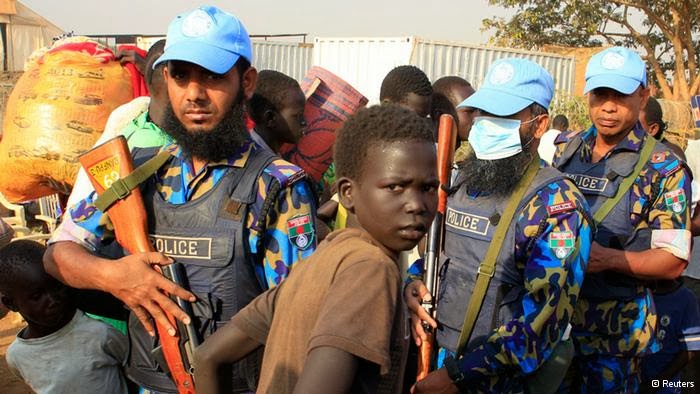
The United Nations will be reducing the presence of peacekeepers in the Darfur region of Sudan, a move which threatens to intensify violence in the region and destroy a fragile peace between the government and opposition groups. On June 29, 2017, the U.N. Security Council unanimously adopted Resolution 2363 for the gradual drawdown of the United Nations–African Union Mission in Darfur (UNAMID). The resolution, drafted by the United Kingdom, calls for the number of troops and police serving in UNAMID to be cut by at least 30 percent. The drawdown will be gradually carried out in two separate six-month phases. The first drawdown will reduce the number of UNAMID troops from 13,000 to about 11,400 by January 2018, and the second drawdown will reduce troops to 8,735 by the end of June 2018. The number of police will be reduced from 3,150 to 2,888 by January and to 2,500 by June.

UNAMID was established by U.N. Security Council Resolution 1769 in July 2007 as a response to the armed conflict in Darfur between rebel groups and government forces. As many as 300,000 were killed in the conflict while another 2.3 million were forced to flee their homes and were displaced. The U.N. Security Council authorized UNAMID to take all necessary actions to protect civilians and humanitarian operations, prevent armed attacks, and ensure the effective implementation of a peace agreement between the government and rebels. UNAMID’s mandate authorized a force of up to 19,555 military personnel and 3,772 police, with a budget of more than $1 billion. UNAMID is the first joint mission between the African Union and United Nations and it is one of the costliest and largest peacekeeping missions. Since its establishment, UNAMID’s military and police personnel have been instrumental in providing physical protection and facilitating access to humanitarian aid for vulnerable civilian populations in conflict-torn areas.

The recent adoption of Resolution 2363, calling for the drawdown of peacekeeping forces, follows a report submitted by U.N. Secretary General António Guterres to the U.N. Security Council on the conflict in Darfur, indicating that there has been a marked decrease in violence due to the Sudanese government’s recent success in suppressing armed movements and curbing intercommunal violence. The drawdown is also part of a U.S. effort to reduce the United Nations’ peacekeeping budget and review peacekeeping missions as their mandates come up for renewal. The United States, which contributes about 28.5 percent of the peacekeeping operations budget, pushed to cut $1 billion from the United Nations’ nearly $8 billion budget for peacekeeping operations. A recent compromise was struck based on a European Union proposal for a $7.3 billion annual peacekeeping budget, which reflects a $600 million cut. U.S. Ambassador to the United Nations Nikki Haley welcomed the budget cut and stated that they were “only getting started.”

The drawdown of peacekeeping troops and the promise of further budget cuts is worrisome, as they threaten to leave civilian populations in Darfur vulnerable and unprotected. While the conflict in Darfur has largely subsided, there are still reports of fighting between government forces and rebel groups, along with reports of attacks against internally displaced persons. Human Rights Watch’s Senior Director for Africa Advocacy Daniel Bekele said the planned cuts “reflect a false narrative about Darfur’s war ending” and that there was “no reason to believe that government attacks on civilians and other abuses have ended since the same security forces remain in place.” Indeed, in May and June of this year there were reports that government forces had clashed with rebel groups in northern and eastern Darfur and displaced thousands of people. Additionally, a March 2017 report by Secretary General Guterres documented more instances of human rights violations in the first quarter of 2017 compared with the same period in 2016.

Given the fragile security situation in Darfur, the drawdown of peacekeeping forces can and should be reassessed if the Sudanese government fails to protect civilians and humanitarian aid workers in areas where peacekeepers will be withdrawn. Resolution 2363 requests that the U.N. Secretary General and the Chairperson of the African Commission, in consultation with UNAMID, provide a report in January 2018, which reviews implementation of the drawdown, impact on the protection of civilians, impact on the ability of civilians to access humanitarian assistance, cooperation of the Sudanese government with the mission, and “whether conditions on the ground remain conducive to further reductions.” The drawdown should be halted if the report in January reveals that withdrawing peacekeeping troops from insecure areas has exacerbated human rights abuses against civilians in Darfur.


The United Nations has previously drawn down peacekeeping forces in the Central African Republic, Democratic Republic of Congo, Burundi, and Liberia. In the Central African Republic, for example, commentators similarly argued that withdrawing peacekeepers from the country was premature and counterproductive. Since the withdrawal, the security situation in the Central African Republic has been rapidly declining. Hopefully, the same doesn’t occur as a result of the withdrawal of peacekeepers in Darfur.

Friday, 16 June 2017

DRASTIC CUTS TO DARFUR MISSION MISGUIDED SAYS UNITED NATIONS

DRASTIC CUTS TO DARFUR MISSION MISGUIDED SAYS UNITED NATIONS
New York — A planned reduction of peacekeeping troops in Darfur risks leaving civilians without much-needed protection in the face of continued violence, Human Rights Watch said today. The United Nations Security Council, which has to renew the mandate for the African Union/United Nations peacekeeping mission in Darfur (UNAMID) before the end of June 2017, should ensure the mission continues to protect civilians from the full range of threats they face, including outside of the greater Jebel Marra area, where they intend to establish a presence.

When deciding how quickly to reduce the size of the force, the Security Council should leave flexibility for the mission to respond to evolving threats, and strengthen the mission's human rights monitoring and reporting capacities.

"The planned cuts reflect a false narrative about Darfur's war ending," said Daniel Bekele, senior director for Africa advocacy at Human Rights Watch. "There is no reason to believe that government attacks on civilians and other abuses have ended since the same security forces remain in place; they have never been prosecuted for their crimes and can't be relied on to protect civilians."

Sudan's forces have carried out fewer attacks on civilians in 2017, particularly since the United States announced it would lift economic sanctions on Sudan, but violence and abuses against civilians persist. The government routinely denies peacekeepers access on the ground and refuses to issue visas to mission personnel.

In late May and early June, Sudanese forces attacked villages in northern and eastern Darfur when rebels clashed with government forces, displacing thousands of people, credible sources reported. The AU-UN mission's report for the first quarter of 2017 found an increase in human rights violations and abuses compared with the same period in 2016, and confirmed that Sudanese government restrictions seriously hamper the peacekeepers from protecting civilians.

The envisioned cuts are part of a strategic review process that began in 2014, amid Sudanese government demands that the mission come up with an exit strategy. A joint AU-UN strategic review of the mission proposed a reduction of nearly half the troops within a year, the closure of 11 bases, and the withdrawal of military forces from 7, citing improvements to the security situation. The changes would cut the military component's physical presence from 36 team sites to 18.

The military component of the peacekeeping mission currently provides protection for civilian patrols more than 250 times a day and provides escorts to aid groups more than 20 times a week. The proposed reductions are likely to limit the ability to conduct patrols and escorts, and the areas where other aid groups can provide food, medical attention, and other essential aid.

The cuts would restrict traditional peacekeeping and emergency attention to the greater Jebel Marra area, despite clear signs that civilians in other parts of the region still need protection. In 2015 and 2016, Human Rights Watch and others documented large-scale attacks by the government's Rapid Support Forces on hundreds of villages. The same forces reportedly fought rebels and attacked villages in May 2017.

About 2.7 million people remain displaced across Darfur, with over 1.6 million living in 60 camps, and hundreds of thousands as refugees in Chad. The Darfur region remains under a state of emergency. The peacekeepers' own reporting describes how intercommunal conflicts and proliferation of militia groups and prevailing lawlessness all threaten civilians. The reduction of the peacekeepers' footprint across Darfur will most likely limit needy communities' access to life-saving aid as humanitarian groups won't be able to reach areas in need without the protective presence of the peacekeeping forces, Human Rights Watch said.

The Security Council should ensure that any cuts are sequenced appropriately and still allow the peacekeepers to serve Darfur's most vulnerable people. The Security Council should also make the mission's human rights component a priority. The unit has a 43 percent vacancy rate and no staff in Khartoum since 2014, due to the government's restrictions and refusal to grant visas.

The Security Council should urge the mission, which has not issued any public human rights reports in the last year and which has been accused of covering up abuses in the past, to resume public reporting so that council members have regular updates on the situation on the ground. It should also insist that the Sudanese government expedite the visas and access it has systematically denied the peacekeepers for years.


"It's too early to talk about moving from peacekeeping to peace-building across Darfur, where hundreds of thousands of civilians confront the threat of violence every day," Bekele said. "As the recent bloodshed and displacement of civilians shows, the UN needs to recognize that a temporary lull does not signal an end of the conflict or risk to civilians."

Wednesday, 7 June 2017

DARFUR PEACEKEEPING FORCE HEADED FOR MAJOR DRAW-DOWN

DARFUR PEACEKEEPING FORCE HEADED FOR MAJOR DRAW-DOWN.
The African Union and the United Nations are proposing major cuts to their joint peacekeeping force in Sudan's troubled Darfur region, paring down one of the world's largest and costliest peace operations.

A joint report sent to the UN Security Council last month recommends that the ceiling set for military troops be cut by 44 percent and the maximum number of police reduced by 30 percent in the UNAMID force. The Security Council is expected to discuss the proposals next week.

The cuts to the 17,000-strong UNAMID force would result in major savings to the UN peacekeeping budget at a time when the United States is seeking to reduce its financial contribution to the blue helmets.

UNAMID has a budget of $1.04 billion per year, making it one of the UN's costliest missions along with the UN force in the Democratic Republic of Congo.

Under the proposal outlined in a strategic review of the UNAMID force, the troop level would drop to 8,735 and the police strength would stand at 2,360. The drawdown would be carried out in two six-month phases.

The report cited an "improvement in the security situation" as a result of the Khartoum government's offensive against rebel groups in Darfur, which are now confined to parts of western Jebel Marra.

Darfur has been engulfed in conflict since 2003, when ethnic minority insurgents mounted a rebellion against President Omar al-Bashir, complaining that his Arab-dominated government was marginalizing the region.

Bashir launched a brutal counter-insurgency, and the United Nations says that at least 300,000 people have been killed in the conflict and another 2.5 million have been forced to flee their homes.

The UN-AU joint mission "should adjust to the new realities in Darfur and the Sudan," said the report from UN Secretary-General Antonio Guterres and African Commission chair Moussa Faki Mahamat.


The peacekeepers would withdraw from several sectors in Darfur and concentrate the mission's main military effort on Jebel Marra, said the report dated May 18.

Sunday, 4 June 2017

Nigerian soldier on peacekeeping mission killed in Darfur

NIGERIAN SOLDIER ON PEACEKEEPING MISSION KILLED IN DARFUR.
A Nigerian peacekeeper serving with the African Union-UN Hybrid Operation in Darfur (UNAMID) has been killed in Darfur, the UNAMID said said on Thursday.

UNAMID, in a statement said the Nigerian soldier was killed by an unidentified group in a carjacking incident in Nyala, South Darfur State.

The Mission extended its condolences to the family of the late peacekeeper and the Government of Nigeria.

“UNAMID strongly condemns this attack, which constitutes a violation of international law.

“The incident has been reported to the relevant Sudanese authorities. “UNAMID calls on the Government of Sudan to swiftly apprehend the perpetrators and bring them to justice.

“The Mission extends its deepest condolences to the family of the late peacekeeper, his colleagues, and the Federal Government of Nigeria.”

The United Nations at a press briefing by Mr Stéphane Dujarric, spokesman for the Secretary-General, confirmed the death and extended its condolences to the family, colleagues and the Federal Government.


“We join the Mission in extending our deepest condolences to the family of the late peacekeeper, his colleagues, and the Federal Government of Nigeria”, Dujarric said.

Tuesday, 2 May 2017

British troops join UN peacekeeping force in South Sudan

BRITISH TROOPS JOIN UN PEACEKEEPING FORCE IN SOUTH SUDAN
May 2, 2017 (JUBA) – The United Nations Mission in South Sudan (UNMISS) said about 400 United Kingdom troops arrived to serve as peacekeepers.

"British troops, proudly wearing their distinctive blue UN berets arrived in Juba today to join the United Nations Mission in South Sudan," UNMISS said in a statement that was released late on Tuesday.

According to UNMISS, the UK contingent will provide a Military Engineering Taskforce to the Malakal and Bentiu Protection of Civilians Sites (POCs), as well as a Level II Hospital in Bentiu.

Also, British troops will also conduct construction to improve the accommodation, security and drainage in the areas, along with the construction of a jetty on the Nile River and a helicopter landing site.

"Alongside their UNMISS colleague, their efforts will make a contribution to protecting civilians and creating conditions to enable the delivery of humanitarian aids," the UNMISS added.

With almost 400 troops in total, this will be one of the UK’s largest operational deployments across the world.

In addition to the UNMISS troops, 4,000 Regional Protection Force members approved by the UN Security Council last year began arriving in Juba this week to pacify the main city and provide security to vital infrastructure and routes leading out of Juba.


There are about 12,000 peacekeepers serving in UNMISS, protecting more than 200,000 civilians in six POCs. The civilians fled violence from government troops at the onset of conflict in December 2013.

Wednesday, 9 April 2014

United Nations may approve force for Central African Republic

UNITED NATIONS MAY APPROVE FORCE FOR CENTRAL AFRICAN REPUBLIC
UNITED NATIONS - France is predicting that the U.N. Security Council will vote unanimously Thursday to authorize a nearly 12,000-strong U.N. peacekeeping force for Central African Republic, which has been torn by mounting violence between Christians and Muslims.

The 10,000 U.N. troops and 1,800 police would take over from more than 5,000 African Union soldiers but not until Sept. 15.

France, the country's former colonial power which drafted the resolution, scheduled the vote for Thursday morning. A separate 2,000-strong French force in the Central African Republic would be authorized to use "all necessary means" to support the new U.N. force, to be known as MINUSCA.

Central African Republic has been in chaos since a March 2013 coup, when mostly Muslim Seleka rebels seized power and launched a brutal regime. Christian Anti-Balaka militiamen attacked Seleka strongholds in the capital, Bangui, in early December, and as the rebel government crumbled in January the anti-Balaka stepped up the violence, forcing tens of thousands of Muslims to flee.

The draft resolution expresses serious concern at multiple violations of human rights and humanitarian law committed by both former Seleka elements and anti-Balaka militia including killings, enforced disappearances, arbitrary arrests and detentions, torture, sexual violence against women and children, rape and attacks on civilians, "in particular but not limited to Muslims," and attacks on places of worship.

The draft resolution "demands that all militias and armed groups put aside their arms, cease all forms of violence and destabilizing activities immediately and release children from their ranks."

The Security Council wants a strong mandate and the draft would authorize the new U.N. force to protect civilians and support the disarmament of combatants and the restoration of peace and law and order. It would also authorize MINUSCA to help investigate violations of human rights and humanitarian law by armed groups including former Seleka rebel and the anti-Balaka.

While U.N. peacekeepers and police will not take over until Sept. 15, the draft resolution will establish the U.N. mission, to be known as MINUSCA, immediately. It will take over all activities of the U.N. political office in Bangui, including supporting the political transition process, humanitarian assistance and human rights monitoring.

The draft welcomes Secretary-General Ban Ki-moon's call for "revitalization and acceleration of the political and reconciliation process in order to lay the ground for an end to the conflict," and it urges the transitional authorities to accelerate preparations for free and fair elections no later than February 2015.

Once MINUSCA is established, the African Union force on the ground will receive logistical support from the United Nations. Many of its members are likely to become part of the new U.N. force after being checked to ensure they meet U.N. standards.

The draft resolution stresses "that all perpetrators of violations of international humanitarian law and human rights violations and abuses must be held accountable and that some of these acts may amount to crimes under the Rome statute of the International Criminal Court."

It would authorize MINUSCA to help investigate violations of human rights and humanitarian law by armed groups, including ex-Seleka and anti-Balaka, "and to contribute to efforts to identify and prosecute perpetrators."

The draft notes that Central African Republic is a state party to the ICC and the court's prosecutor has opened a preliminary examination of alleged crimes committed in CAR since September 2012.

Monday, 27 January 2014

South Sudan: Peacekeepers Boost Security for Civilians On UN Mission's Bases

SOUTH SUDAN: PEACEKEEPERS BOOST SECURITY FOR CIVILIANS ON UN MISSION'S BASES
Joint police and military patrols and the use of metal detectors are among the security steps being taken by the United Nations peacekeeping mission in South Sudan (UNMISS) to protect some 65,000 displaced civilians seeking refuge on its bases and in the surrounding community.

"An array of security measures have been put in place," the Mission today confirmed in a news release. It noted that UN Police Commissioner Fred Yiga is meeting regularly with South Sudan's Police Inspector General and with the Central Equatoria Police Commissioner to address all security concerns.

Weapon searches are being undertaken at all the main bases, which include the capital Juba, Bor in Jonglei state, Bentiu in Unity state, and Malakal in Upper Nile state.

United Nations Police (UNPOL) supported by UNMISS military forces are heading the searches, which include 'combing' the areas with metal detectors. UNPOL and military are also jointly patrolling inside and in the immediate vicinity of all the sites, with troops guarding the perimeter.

Fencing, berms and ditches have been built, and displaced persons coming in and out are systematically screened and controlled, the Mission said. It is also planning additional security measures to further strengthen the camp perimeters.

"Another 63 additional UN police personnel arrived yesterday, bringing the total number of UNPOL reinforcements to 315," according to figures in the UNMISS news release.

An additional group is due to arrive next Friday. They will deploy in Formed Police Units to UNMISS bases in Juba, Malakal and Bentiu.

With that final group on the ground, the additional "more robust and armed police units" authorized by the UN Security Council last month will be completed, the Mission said.

As requested by UN Secretary-General Ban Ki-moon, the Council in December unanimously approved a temporary increase in the strength of the UNMISS of up to 12,500 military and 1,323 police from a current combined strength of some 7,000, through the transfer of units if necessary from other UN forces in the Democratic Republic of Congo (DRC), Darfur, Abyei, Côte d'Ivoire and Liberia.

The congestion of the sites also poses a challenge to the safety of civilians, UNMISS said. As of yesterday, it has moved hundreds of newly arrived displaced persons from the UN Tomping compound to the protection site at UN House where space is still available.

UNMISS reiterated that it is impartial in the ongoing conflict, and in the implementation of its mandate to protect all civilians "irrespective of who they are, where they come from and what their ethnic background is."


The fighting between anti- and pro-Government forces has continued even as political talks with the parties in the Ethiopian capital of Addis Ababa seek to establish a ceasefire. The talks are being held under the patronage of the Inter-Governmental Authority for Development (IGAD).

Thursday, 16 January 2014

Rebels attack town in eastern DR Congo, UN reports

(Peacekeepers serving with the UN Organization Stabilization Mission in the Democratic Republic of the Congo (MONUSCO) on patrol. UN Photo/Sylvain Liechti)

REBELS ATTACK TOWN IN EASTERN DR CONGO, UNITED NATIONS REPORTS
14 January 2014 – The United Nations today reported a new rebel attack in the eastern Democratic Republic of the Congo (DRC) as the region continues to suffer from deadly violence even after the defeat of a major dissident group, the M23, over a month ago.

In the latest violence, Mayi Mayi Sheka fighters attacked Pinga, in North Kivu province, but left after a 30-minute gun fight with the Congolese Armed Forces (FARDC), the UN peacekeeping force in the DRC (MONUSCO) reported.

Around 1,000 civilians sought refuge during the confrontation near the UN Mission’s base in Pinga, but only 90 remained there today, the others having returned home.

Briefing the Security Council yesterday by video link from Kinshasa, the DRC capital, Secretary-General Ban Ki-moon’s Special Envoy for the Great Lakes Region, Mary Robinson, warned that the positive atmosphere that prevailed last month following the defeat of the M23 rebel group has “vanished” and the region is going through a period of renewed turbulence.

This has been marked by deadly attacks in eastern DRC by another rebel group, the Allied Democratic Forces (ADF), the ongoing crisis in Central African Republic (CAR) and the eruption of fighting in South Sudan.

The Peace, Security and Cooperation Framework for the DRC and the Region, signed by 11 nations last February, remains “the best chance” to achieve sustainable peace, security, cooperation and development in the Great Lakes Region, she said.

In the same briefing Mr. Ban’s Special Representative for DRC Martin Kobler called the Framework a major milestone, along with the creation of an intervention brigade within MONUSCO and the use of unmanned aerial vehicles, which put all armed groups on notice that “we have the will and the means to take robust action at any time.

“In the coming weeks, we will finalize the review of our military deployment across eastern Congo. We will then have a more flexible force. We need it to be more agile, ready to deploy when it is needed and where civilians are threatened, to take on the threat,” he added, also noting that peace in eastern DRC can only be durable if its root causes are addressed.

“Restitution of State authority alone is not enough. Only regional cooperation and good governance will provide the peace dividend the population is expecting.”

Today he strongly condemned the latest attack and sent his condolences to the families of those who lost their lives and the Congolese people, stressing that MONUSCO will continue to work to consolidate the recent military gains.

The DRC has been torn apart by civil wars and factional fighting since it became independent from Belgium in 1960, but with the support of a series of UN missions a measure of stability has been restored to much of the vast country over the past decade.

But fighting between the Government and a variety of rebel and sectarian groups has continued to devastate the eastern regions, particularly North and South Kivu provinces.


In March, the Security Council authorized the deployment of an intervention brigade within MONUSCO, based in North Kivu province with a total of 3,069 peacekeepers, to carry out targeted offensive operations, with or without FARDC, against armed groups threatening peace in eastern DRC.

Sunday, 12 January 2014

United Nations lost 58 peacekeepers in 2013

UNITED NATIONS LOST 58 PEACEKEEPERS IN 2013
New York, US - The UN lost 58 military, police and civilian peacekeepers last year, who were working to bring peace and stability to parts of the world, a report of UN staff union has said.

PANA in New York on Friday reports that the Staff Union said working for the United Nations had became more dangerous last year, with at least 58 personnel targeted by terrorists and insurgents.

It noted that the highest number of casualties occurred in attacks targeting the UN in South Sudan, Somalia and Sudan's Darfur region.

It said 33 peacekeepers and 25 civilians and associated personnel were killed in 2013 while working for the organisation, stating that the number represented an increase in the death toll from attacks on UN staff members compared with the previous year, when 37 UN personnel were killed.

The union cited the horrific assaults on the UN Mission in South Sudan (UNMISS), which resulted in the killing of 12 people during an ambush on 9 April 2013 in Jonglei State, South Sudan.

The UN Department of Peacekeeping Operations (DPKO) in New York said about 30 peacekeepers were escorting a civilian convoy when they were ambushed by some 200 armed, unidentified men near the settlement of Gumuruk.

The firefight that followed killed five Indian peacekeepers, two national staff and five contractors.

The report also said overall, 16 peacekeepers were killed in Darfur, seven in South Sudan, four in Mali and four in the Democratic Republic of the Congo (DRC).

In addition, it said, five civilian staff members, four of them working for the UN Relief and Works Agency for Palestine Refugees (UNRWA), were killed in Syria.

The Staff Union’s overview comes just months after UN Secretary-General Ban Ki-moon appealed to UN member states and host governments to support all measures of safety and security measures to improve the operational environment for UN personnel and humanitarian workers.

Ban stated: 'United Nations personnel serve in an increasingly dangerous environment and encounter a variety of threats not previously encountered in the history of the organisation.'

He cited a UN report released last year, which said: 'Safety and security of humanitarian personnel and protection of United Nations workers showed that significant security incidents affecting UN staff in 2012 increased to 1,793 compared with 1,759 in 2011.'


The report also stated that violent acts were cited as the primary cause of death or injuries during 2012, with 20 of the 35 deaths attributed to this, while 15 staffers were killed in safety-related incidents.

Saturday, 11 January 2014

Extra UN troops for South Sudan

EXTRA UNITED NATIONS TROOPS FOR SOUTH SUDAN
The United Nations says it's working "as quickly as possible" to deploy 5,500 extra UN peacekeepers to protect civilians in South Sudan where fighting is focused on the oil hub of Bentiu and the Nile river town of Bor.

Forces of South Sudan's President Salva Kiir sought to regain the oil hub of Bentiu from rebels on Friday. At the UN, peacekeeping chief Herve Ladsous said extra troops were being deployed to protect Sudanese civilians.

Briefing the UN Security Council, Ladsous said the violent breakup of South Sudan's administration in mid-December had left probably a quarter of a million South Sudanese displaced, including 60,000 sheltering at UN compounds and tens of thousands who had sought refuge in Uganda, Kenya and Ethiopia.

Ladsous said the deadline for the extra deployments was "between four and eight weeks." Troops and police would be drawn from other UN and African Union missions, across Africa, he added, and would go "into a pro-active footing."

South Sudan's fighting, often along ethnic lines, has pitted Kiir's SPLA forces against rebels loyal to former vice president Riek Machar.

8,000 sheltering at Bentiu
The UN said it was ready to fend off any attacks on its own compound at Bentiu where 8,000 people are sheltering. UN deputy spokesman Farhan Haq described the situation as "unclear and fluid."  The news agency AFP said fighting was also raging around the town of Bor, the only other major town in rebel hands.

Hundreds of people fled through crocodile-infested swamps of the White Nile river and told how gunmen had shot civilians with machine guns as they fled.

Peace talks in deadlock
With peace talks in neighboring Ethiopia in deadlock, US Assistant Secretary for Africa Linda Thomas-Greenfield said South Sudan – formed only 3 years ago – was "in danger of shattering."
"Each day the conflict continues, the risk of all-out civil war grows as ethnic tensions rise," she told US lawmakers in Washington. The talks have faced delays after Kiir refused a rebel demand to release 11 high-level political detainees.

Death toll 'substantially' higher
At the UN, Ladsous said he estimated that the death toll was "very substantially in excess" of the 1,000 deaths the UN cited just after the conflict erupted on December 15. The violence began as a clash between rival army units in what President Kiir said was an attempted coup by Machar.


Machar denied that accusation, accusing Kiir of trying to root out political opponents. The conflict has trimmed South Sudan's oil production by around a fifth, depriving the impoverished nation of its main source of foreign currency.

Monday, 6 January 2014

United Nations peacekeepers fail to stop African wars

UNITED NATIONS PEACEKEEPERS FAIL TO STOP AFRICAN WARS
NAIROBI: The United Nations has dispatched a record number of peacekeepers in Africa in recent years, deploying soldiers to trouble spots such as the Central African Republic and South Sudan. Yet the “blue helmets” and thousands of other soldiers sent by African regional groups have failed to prevent fresh spasms of violence.

The peacekeeping forces have cost billions of dollars, largely paid by the US and European nations. But they have been hobbled by weak mandates and a shortage of manpower and equipment. Some critics also say Washington, its allies and UN officials are at fault in the peacekeeping failures, for not following through with enough political pressure to prevent crises.

”The political and diplomatic elements of the international response to most Africa conflicts have been slow and ineffective,” said John Prendergast, a long-time Sudan and South Sudan activist. That, he said, “has put more pressure on peacekeeping missions to fulfil objectives for which they are totally unprepared.”

In South Sudan, a power struggle that US and UN officials were aware of for more than a year has now sparked an ethnic and political conflict that has killed hundreds, raising fears of a potential civil war.

On Friday, the warring sides held their first round of peace talks in neighbouring Ethiopia, but the conflict showed no signs of abating. Already, nearly 200,000 people have been displaced by the fighting.

Frustration with the peacekeepers is rife. Ibrahim Muhammed, 30, fled the volatile Sudanese region of Darfur a year ago and arrived in South Sudan searching for a better future. Today, he languishes inside a UN peacekeeping base in the war-ravaged South Sudanese town of Malakal, living in a tent made of blankets.

”The UN peacekeepers have not been able to stop the violence in Darfur, and so I came here,” said Muhammed, a shopkeeper. “But in South Sudan now, the situation is similar to Darfur. The peacekeepers won’t be able to stop the attacks.”

Toby Lanzer, a senior UN official in South Sudan, conceded there are limitations to what peacekeeping forces can accomplish in trouble spots. In many situations, including South Sudan and the Central African Republic (CAR), UN and African forces lack resources and a sufficient number of soldiers, he added.

There are now more UN peacekeepers in Africa than at any time in history — roughly twice as many as in the early 1990s. As of the end of November, more than 70 per cent of the 98,267 UN peacekeepers deployed globally were in sub-Saharan Africa, according to Peter Pham, executive director of the Atlantic Council’s Africa Centre.

UN forces have often been limited by mandates that only allow them to fight in self-defence. Shortly before genocidal attacks erupted in Rwanda in 1994, for example, UN peacekeepers learned that arms were being imported illegally by an ethnic Hutu militia.

But senior UN officials ordered the peacekeepers not to seize the weapons because it was outside the scope of their mandate, their commander, Brig. Romeo Dallaire, later recounted in a book.

More than two years ago, the UN mission in South Sudan was authorised to have up to 7,500 military personnel and police. But it was unable to stop the ethnic and political blood-letting that had been occurring since the country won independence from Sudan in 2011.

In Jan 2012, the UN mission was heavily criticised by victims and community leaders for doing little to stop a wave of tribal killings in Jonglei State, the same region that is now a battle zone.

African peacekeeping troops not under the UN banner often have even less equipment, training and resources. Yet, they are increasingly being called upon to help contain crises around the continent.

In CAR, African Union peacekeepers have been unable to stop the brutalities committed by Muslim Seleka rebels and Christian militias in the sectarian conflict. Soldiers from Chad, a Muslim nation that is part of the peacekeeping force, have been accused of supporting the Muslim rebels.

”Even with increased engagement in peace operations, questions remain about the quality and capability of African troops,” Comfort Ero, the Africa director for the International Crisis Group, wrote in a blog on the group’s website last month.

In CAR, hundreds of soldiers from France, the former colonial power, were sent to defuse the crisis after African peacekeeping forces failed to do so.

Still, when resources, training and a strong mandate are provided to African peacekeepers, there have been some successes.


In the Democratic Republic of Congo, where the UN mission has been widely criticised as unable to protect civilians, the recent deployment of a rapid reaction UN combat brigade with a strong mandate helped defeat the M23 rebels.—
(By arrangement with the Washington Post)

Search This Blog

Facebook page like

Powered by Textbook Widget

Popular Posts